
SOMETHING IS EATING THE RICE by Saleah Yusuf
By the time I reached the last bag of rice, I could barely remember his voice.
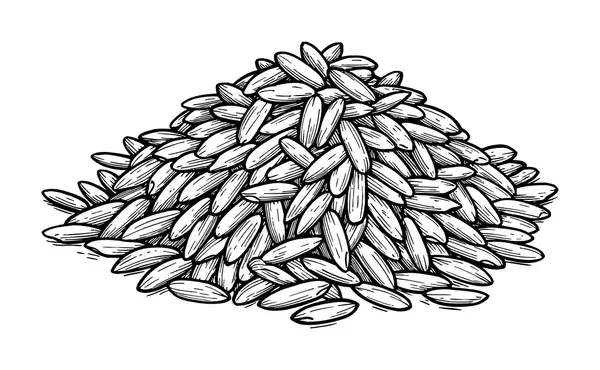
At first, I blamed the rats. Everybody in this compound has rats. They chew through concrete if you let them. So, when I saw the neat, finger-sized holes torn into the sacks, I fetched traps and set them under the shelves.
By morning, the traps were empty. The holes were bigger.
When I bent to inspect the torn edge of one bag, I noticed something strange— the rice inside was warm. Not hot. Just warm, like someone had been running their fingers through it. And the smell— not spoiled, not damp. Sweet. Like sugar and milk.
I told myself it was grief. I was still getting used to sleeping alone. Still waking up at 2 a.m., reaching for someone who wasn’t there. The house was too quiet. Even the ceiling fan sounded lonely.
But the next night, I woke to a sound coming from the store room. Not gnawing—more like… breathing.
I stayed in bed, eyes open, heart thumping, trying to convince myself it was just the fridge humming. But then came the crunch. A slow, deliberate chewing sound. Rice cracking between teeth that were too patient.
When I gathered the courage to go in the morning, there were footprints on the cement floor. Small, bare, childlike.
Only— we don’t have children.
______________________
I called the pastor. Not the big one from church; the smaller one who lives behind the tailor’s shop. He came with his Bible and a bottle of olive oil and asked where I kept the rice.
We stood there in the doorway, the light from his phone torch flickering. I could smell his sweat over the oil.
“You said your husband died recently?” he asked.
I nodded. “Forty days ago.”
He nodded back slowly, as if confirming something with someone I couldn’t see. “Sometimes,” he said, “they come back hungry.”
I almost laughed. But he was serious. He sprinkled the oil around the sacks, muttering in tongues. I tried to follow his eyes— they seemed to be watching something move just beyond the edge of the lamplight.
When he finished, he told me to boil salt water and sprinkle it at the corners of the house. “If it’s a spirit, salt will burn its tongue,” he said. “If it’s a rat, it will die.”
That night, I sprinkled salt until my fingers ached. The air smelled sharp, metallic. I sat in the dark, waiting.
At 2:17 a.m., I heard it again. The breathing. Slow. Steady.
I didn’t move.
Then— a whisper. Faint, like it came from inside the wall.“Anwuli…”
That was my name.
______________________
In the morning, I couldn’t remember what he sounded like anymore. I could remember his face, his shirts hanging by the window, the way he used to hum before dinner. But his voice— gone. Just static in my head.
The rice kept disappearing.
Every day, a little less. The grains were spreading too — scattered under the bed, in the corridor, on top of the table where he used to keep his car keys. Once, I found a single grain pressed into my pillow.
It pulsed when I touched it.
______________________
The pastor stopped coming after the third visit. He said my house was “not receptive to prayer.” The oil didn’t last five minutes before drying up. He told me to stop digging into the past— to let the dead rest.
But the thing in the store room was not resting.
That night, the door to the store opened by itself. The sound woke me— a slow creak, like something had been waiting for permission.
When I peeked in, the bags were open. All of them. Rice spilling like guts across the floor. I saw it then— something crouched, human-shaped but too thin, fingers trembling as it scooped handfuls of rice into its mouth. Its face was buried, but I saw the back of its head. I knew that hair. That scar on the shoulder.
He was eating like he hadn’t eaten in years.
I should have screamed. Should have run. But I just watched.
When he finished, he stood up, wiping his mouth with the back of his hand — that same gesture I used to tease him for. He turned toward me, but his eyes were hollow, filled with something wet and shifting.
“Anwuli,” he said, voice grainy, dry. “You’re wasting food.”
______________________
I don’t remember what happened after that.
The neighbors say they saw me standing outside at dawn, covered in rice, holding a half-burnt candle. They said I kept repeating, “He’s full now. He’s finally full.”
I don’t remember saying that.
All I know is the bags are empty now. The store room is clean, almost new. The air feels light again. I should feel safe.
But last night, when I tried to cook, the pot stayed cold. The rice refused to boil.
And when I went to fetch salt, I found a single grain sitting on the counter.
It was warm.
Breathing.
Saleah Yusuf is a Nigerian writer whose work explores psychological horror, domestic tension, and the quiet fractures within ordinary spaces. Her fiction often centers on the familiar turning strange, drawing from contemporary Nigerian settings and emotional landscapes


Comments